Windows Baseline Protection could allow apps to block unprotected PCs
★ Add us as a preferred source on GoogleTL;DR
Microsoft is previewing Windows Baseline Protection, a feature that lets developers like Adobe and Battle.net decide if an app should run based on whether a PC meets eight specific security requirements.
Microsoft is previewing a new security feature called Windows Baseline Protection for Windows Insiders, with general availability planned for 2027. The system consolidates eight existing protections into a single check to tell an app if a PC meets specific security standards. These protections include TPM 2.0, Secure Boot, virtualization-based security (VBS), Memory Integrity, kernel debugger protection, vulnerable driver protection, and requirements for signed and Windows-certified drivers.
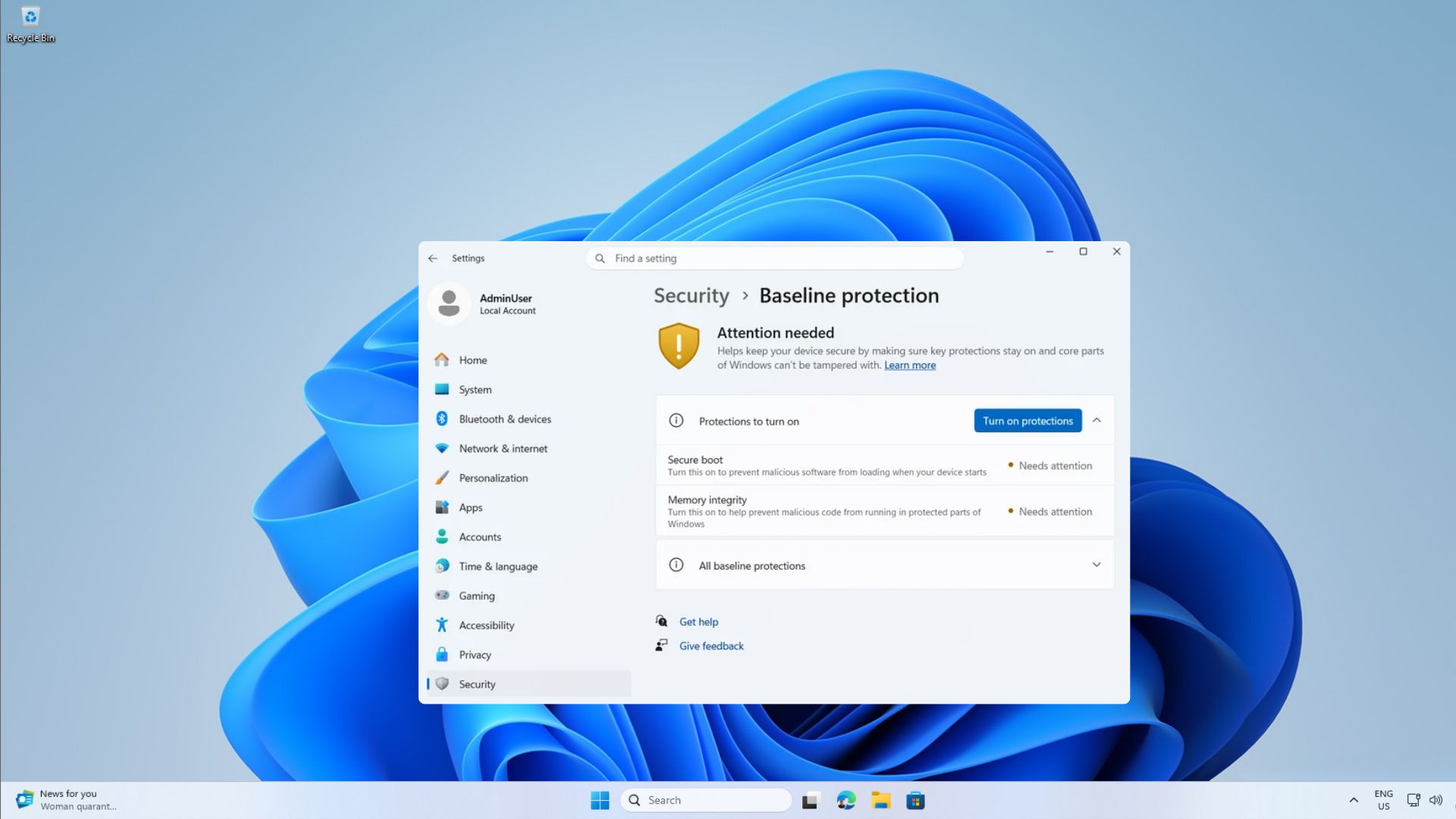
The feature allows developers to choose how to respond if a PC fails the check. Microsoft says companies can show a warning, limit certain features, or refuse to run the application entirely. Pavan Davuluri, Executive Vice President of Windows + Devices, said the tool lets developers verify that devices meet their security requirements.
Adobe, Battle.net, 1Password, Raycast, and Schoolyear are already testing the check. While these companies are participating in testing, none have said they will block PCs that fail the requirements. Schoolyear Lead Security Engineer Gergely Homonnai said the company uses the API to confirm a student's PC meets standards before an exam. Battle.net VP of Engineering John Yaney said the check helps Blizzard raise security while keeping friction low for players. Adobe Vice President of Global Consumer Trust Michael Draper said the feature helps the company catch counterfeit and malicious software.
Windows Baseline Protection may affect players who disabled security features like Memory Integrity to improve frame rates. A PC that fails the check will be identified by the OS during boot using measurements from the security processor.
More on Microsoft
Via Windows Latest ↗ · Also from VGTimes ↗ · Other coverage: Wccftech ↗, TechSpot ↗, eTeknix ↗
Spot a mistake? Tell us