Windows 11 update adds RDMA over USB4 for daisy-chained PCs
★ Add us as a preferred source on GoogleTL;DR
Microsoft says the feature connects multiple machines to process heavy workloads like local AI inferencing with lower latency.
Microsoft is adding Remote Direct Memory Access over the USB4 protocol to Windows 11. The update allows users to daisy-chain multiple PCs together to distribute large workloads across shared system memory.
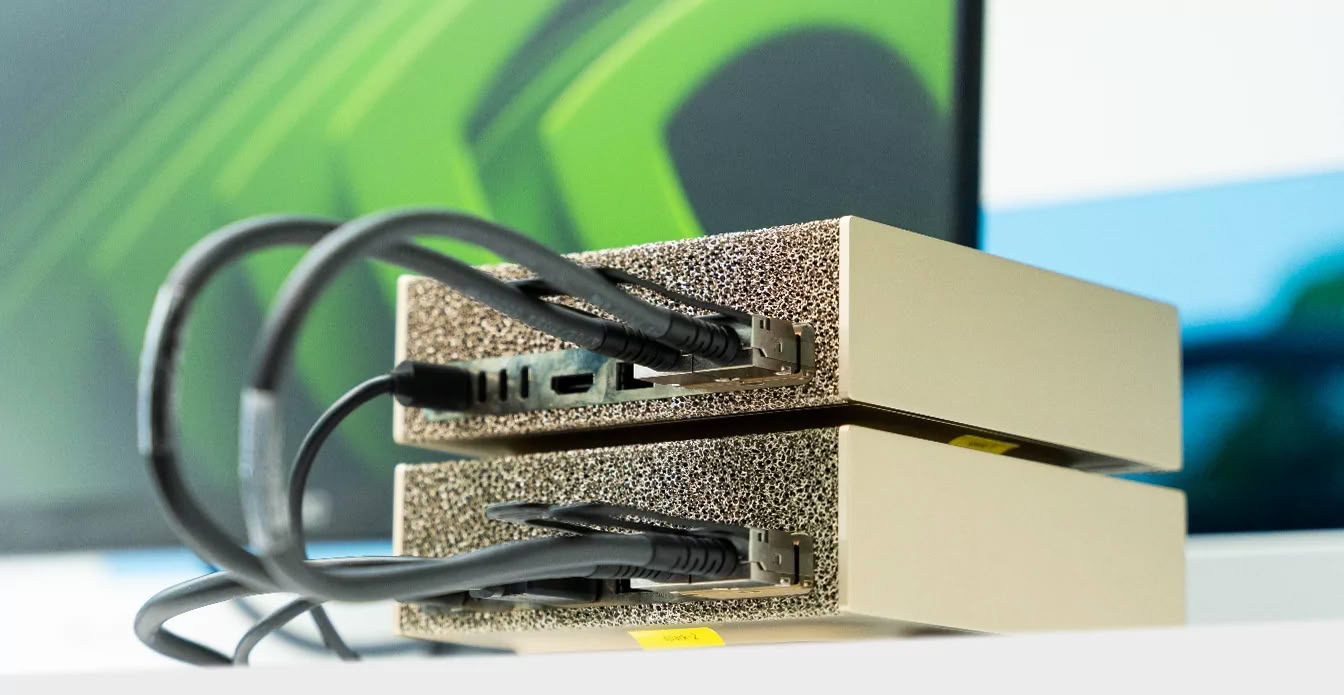
Microsoft interconnected two machines to measure round-trip message latency. The RDMA implementation achieves latencies between 28 and 50 microseconds, making it roughly four times faster than Ethernet over USB4 using UDP, which measures between 116 and 194 microseconds. USB4 provides up to 80 Gbps of bandwidth for the data transfers.
The connection manager sets up a peer-to-peer tunnel across separate USB4 domains. Send and receive queues are mapped directly to host router DMA rings by a software RDMA provider to reduce extra data copies. NetworkDirect lets compatible frameworks access the link without needing code specific to USB4.
Kernel DMA Protection and Windows-managed USB4 ports are required for the feature. Available ports and rings on each machine limit the overall cluster size.
More on AI in gaming and hardwareMicrosoftWindows
Via Microsoft ↗ · Also from TechPowerUp ↗ · Other coverage: VideoCardz ↗
Spot a mistake? Tell us